
“The Boss” makes surprise appearance at benefit show protesting federal immigration enforcement killings
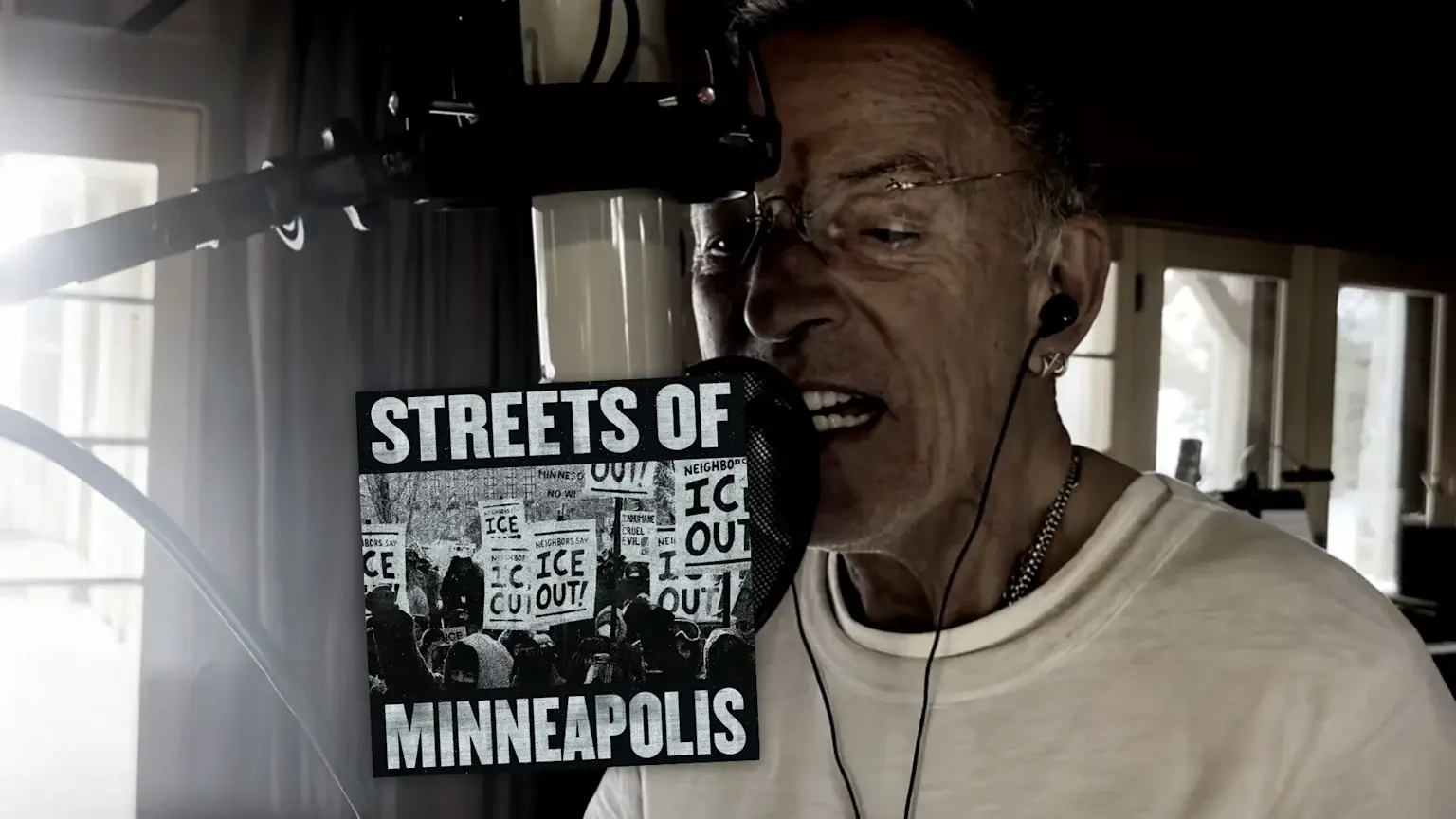
Minneapolis, MN – Bruce Springsteen made an unannounced appearance at a benefit concert Friday night at First Avenue in Minneapolis, debuting his new protest song “Streets of Minneapolis” and joining guitarist Tom Morello in a powerful show of solidarity against what they called state-sponsored violence.
The Concert of Solidarity and Resistance to Defend Minnesota, organized by Morello of ‘Rage Against the Machine’ fame, brought together several prominent rock artists to protest the recent killings of Americans Renee Good and Alex Pretti by United States Immigration and Customs Enforcement and Customs and Border Protection agents during a local immigration crackdown.
A Song Born From Urgency
Springsteen rushed out “Streets of Minneapolis” with remarkable speed, writing it on Saturday, recording it Sunday, and releasing it Wednesday in response to the killings. The concert marked the song’s live debut just two days after its official release.
“I wrote this song on Saturday, recorded it yesterday and released it to you today in response to the state terror being visited on the city of Minneapolis,” Springsteen wrote on Facebook. “It’s dedicated to the people of Minneapolis, our innocent immigrant neighbors and in memory of Alex Pretti and Renee Good. Stay free, Bruce Springsteen.”
Fans had tracked Springsteen’s movements throughout the day using flight tracking services, with reports circulating that a plane from near his New Jersey home departed for Minneapolis-St. Paul International Airport at 7:30 AM. Despite frigid temperatures, fans lined up early, hoping to witness what Morello had promised would be a “very special guest.”
Morello: ‘I’m an Outside Agitator’
Tom Morello, who opened the show with ‘Rage Against the Machine’s’ “Killing in the Name,” made his intentions clear from the outset.
“I don’t live here. I’m an outside agitator. I’ve come to stir up trouble,” Morello told the crowd. “We are here to stir up as much trouble as we can because we care about this country, democracy, freedom and to oppose tyranny, racism and the incredibly horrible state terror that the Trump administration is inflicting on our country.”
During his set, Morello paid tribute to multiple victims of police violence, from George Floyd to the recent deaths of Pretti and Good. He also performed material from ‘Audioslave’, another of his projects.
After Springsteen’s performance of “Streets of Minneapolis,” the Boss returned to the stage to join Morello’s band for “The Ghost of Tom Joad,” the title track from Springsteen’s 1995 album based on John Steinbeck’s novel “The Grapes of Wrath.” The two musicians concluded the evening by announcing they would lead a march through nearby city streets.
Springsteen also joined in a group rendition of John Lennon’s “Power to the People.”
White House Responds
The Trump administration quickly dismissed Springsteen’s protest song. In an official statement released Thursday, just after Springsteen premiered an official video for “Streets of Minneapolis,” a presidential spokesperson responded sharply.
“The Trump administration is focused on encouraging state and local Democrats to work with federal law enforcement officers on removing dangerous criminal illegal aliens from their communities, not random songs with irrelevant opinions and inaccurate information,” the statement read. “The media should cover how Democrats have refused to work with the administration, and instead, opted to provide sanctuary for these criminal illegals.”
Other Artists Join the Protest
The benefit concert also featured ‘Rise Against’, who performed a politically charged cover of Neil Young’s “Rockin’ in the Free World,” as well as performances by Al Di Meola and Ike Reilly.
First Avenue, the legendary Minneapolis venue made famous in Prince’s film “Purple Rain,” announced that 100 percent of proceeds from the show would go to the families of Renee Good and Alex Pretti.
A Nation Divided
The Minneapolis benefit concert, scheduled to coincide with a planned national strike and protest against federal immigration agents, represents the latest flashpoint in an increasingly polarized cultural landscape where artists are taking bold political stances despite potential career consequences.
For Springsteen and Morello, the risk appears worthwhile. Their decision to transform grief and outrage into action demonstrates the enduring power of protest music in American culture, even as the political costs of such activism continue to rise.