


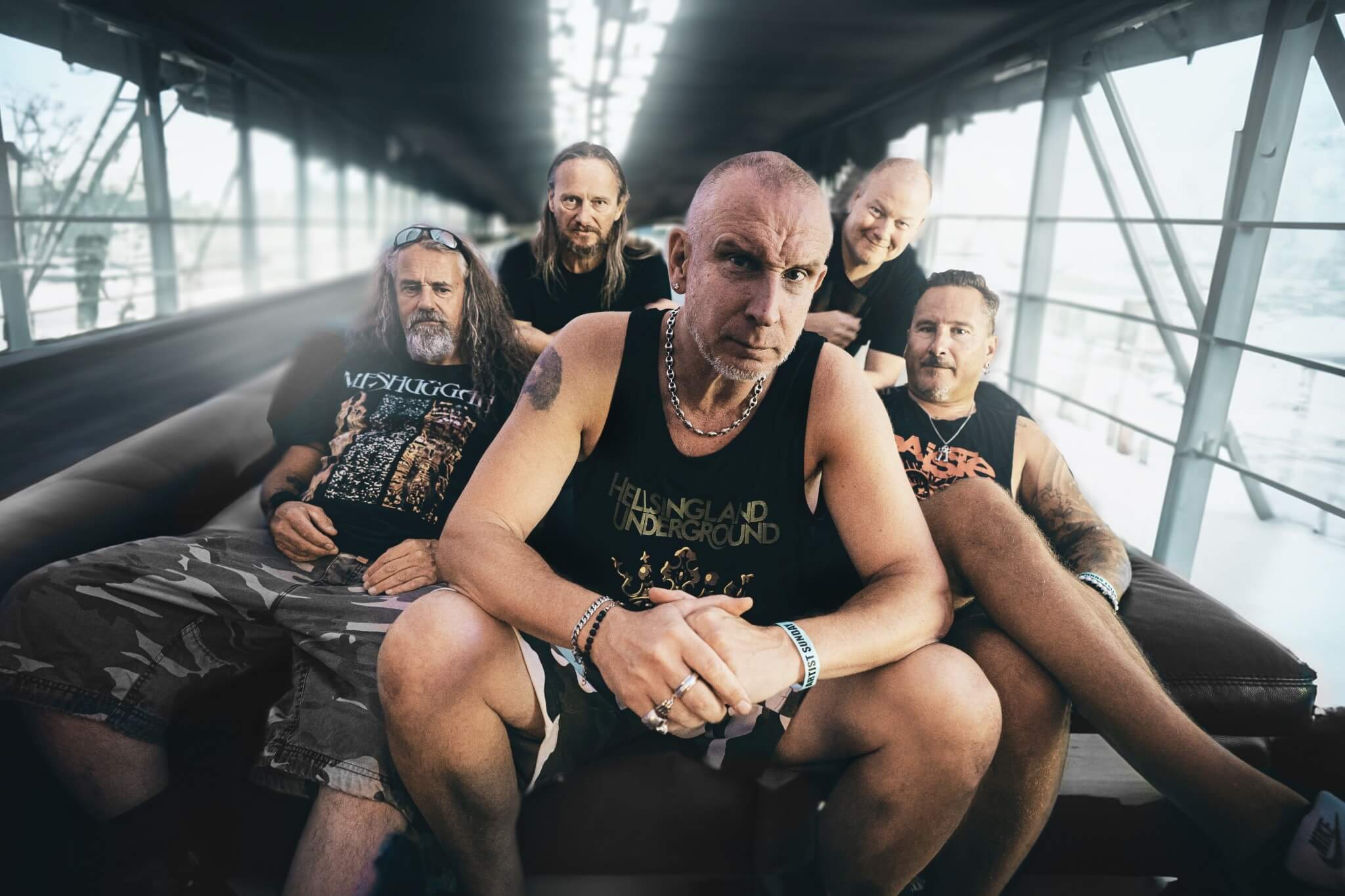
In exclusive interview with All Metal, guitarist Bård Torstensen discusses the band’s return, political rage, and why they’re screaming louder than ever while the world burns.
Eighteen years is a lifetime in heavy music. When Clawfinger released their last album, MySpace was still relevant, Napster had just detonated the foundations of the music industry, and there was a vague collective belief that humanity might eventually get its act together. It didn’t. And that unresolved tension, political, environmental, deeply human, is exactly where Clawfinger pick up the thread with their long-awaited return, “Before We All Die“, due out on February 20, 2026.
This is not a nostalgia-driven comeback, nor a cautious attempt to reconnect with a past audience. It is a record born out of distance, frustration, and an unfiltered need to speak plainly. Talking with guitarist Bård Torstensen makes it clear that the band’s long silence was not the result of creative exhaustion, but of survival and recalibration. The late 2000s changed everything.
“If I take you back to 2007, 2008, that was the time when Napster started, we stopped selling albums, we couldn’t sell anything more, because the bottom fell out of the record company system,” he explains. “So it was like, we have to do something else. Do we want to stay on tour for 11 out of 12 months, and that means we don’t have a family?”
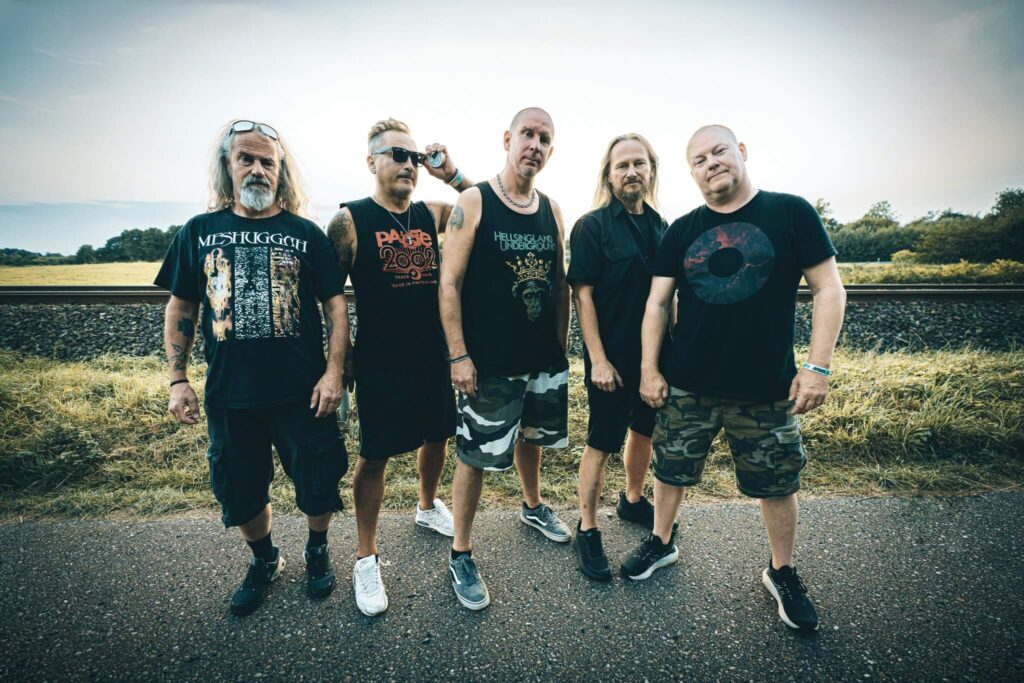
Clawfinger chose to step back. They took regular jobs, played select shows, and refused to force creativity that simply was not there. For years, songwriting felt blocked, not uninspired but disconnected. “When you have that kind of situation in a band, it’s not like inspiring creativity,” Torstensen admits. What eventually reopened that door was not a grand plan or external pressure, but conversation. “We started talking again, really talking. Sending files back and forth. One song became another. Suddenly we had six or seven songs.” The album title emerged almost accidentally, half joke and half uncomfortable truth. Vocalist Zak Tell said, “We are very old. Should we do another album before we all die?” The line stuck because it felt honest. “All right, that’s a good album title. Let’s make this album,” Torstensen recalled.
That honesty defines the record. “Before We All Die” opens with “Going Down (Like Titanic)“, a song that frames the entire album as an observation of collective denial. The ship is sinking, the band is playing, and the party continues as if nothing is wrong. “That’s some kind of way what I feel,” Torstensen admits. “It’s not really getting better, is it? Maybe even gets worse when you see the last couple of years and what happens in politics and the way they treat the environment.” The album does not pretend to offer solutions. Instead, it documents collapse with clarity and anger that has matured rather than softened.
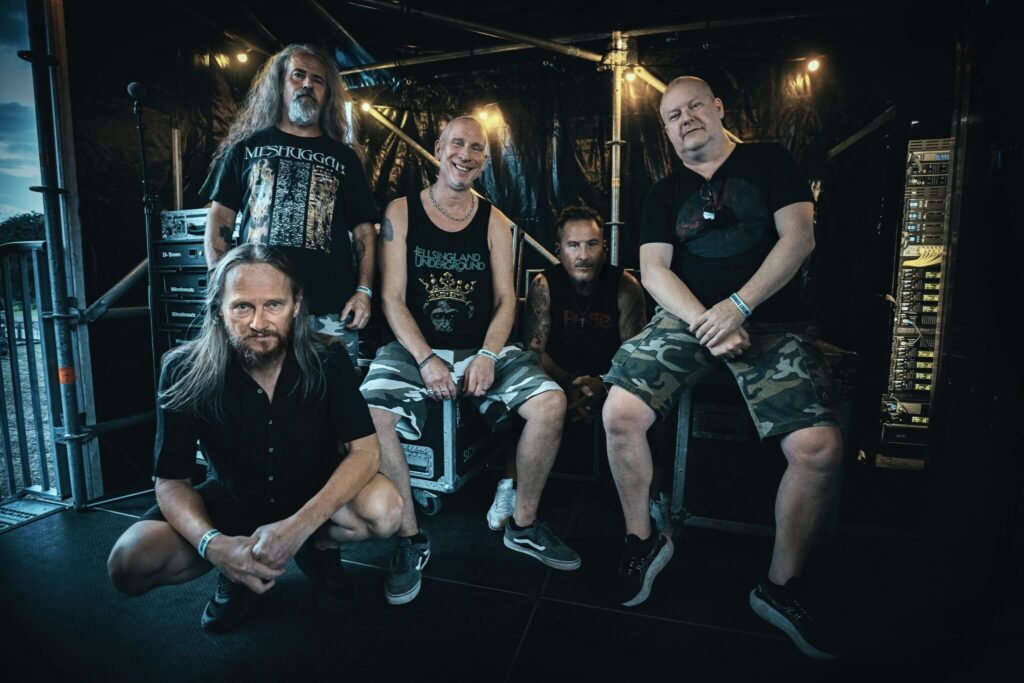
Songs like “Environmental Patients” confront humanity’s inability to change course, but without shifting the blame outward.
“Maybe the thing that pisses me off mostly is that I’m part of it. I can’t say that the rest of the world should change if I can’t change myself. It’s so hard to find a way to live the way we do and still take care of the environment. So I will start with myself, and being angry at myself before pointing the finger to somebody else. It’s the same amount of anger goes to myself.”
That self-awareness is crucial to understanding this record. The rage is still present, but it is now tempered by accountability and fatigue. It is not the anger of youth looking for enemies, but of experience recognizing complicity.
That same perspective informs the album’s more personal moments. Tracks such as “A Fucking Disgrace” and “Ball & Chain” dig into shame, inner resistance, and the quiet ways people sabotage themselves. “When you get older, at least me, I get more able to be honest with myself. The older I get, I think I’m getting more honest with myself, because in the beginning, it’s a lot about career and keeping a face and keeping an image, but when you get old like me, you don’t give a fuck.” That lack of filter is one of the album’s defining traits. These songs feel less like statements made to an audience and more like thoughts that were never meant to be polite.
“The songs are about inner roadblocks and shame and the feeling of being your own obstacle. That’s how I feel many times. I’m sitting in the car, and when I’m in the car, I can show all my ticks. I’m alone, and I can scream at the world, telling everybody to fuck off in a loud way. Then when I get out of the car, it’s like, ‘Ooh, yeah. Now I’m cool again.’ I’m driving carefully, but I’m screaming behind the wheel.”
That directness extends to the band’s visual language as well. The video for “Scum,” released six months ago, leaves no room for interpretation and no interest in subtlety. “It shows Donald Trump. He’s a fucking asshole. That’s what it shows. We don’t usually use hidden messages in our way of expressing ourselves. The way he behaves, I’m getting angry every day about it. He’s fucking scum. That’s what I say.” Clawfinger have never been a band for coded symbolism. Their politics have always been confrontational, explicit, and deliberately uncomfortable, and in 2026 they see no reason to change that approach.
Despite producing the album themselves alongside Zak Tell and Jocke Skog and returning after nearly two decades, Torstensen insists there was no process of relearning how to be Clawfinger. “If we try to do a country song, it still sounds like Clawfinger. We have no choice. That’s who we are. We can’t really control it that way, but when it’s us together, it becomes Clawfinger. That’s the way we are. We tried many times to do stuff differently, to make it sound differently. But we have no choice.” That identity was forged in the early 1990s, when blending heavy riffs with rap vocals was not a trend but a risk. Back then, the band had no blueprint, only instinct. “Nobody ever made an album with that kind of music when we started doing it. There was a guy who was rapping and just doing karate kicks up in the roof, up in the ceiling, at the hospital where we worked. He was rapping all the time. We were guitar players, and it’s like, ‘Why don’t we try to bring him into this, what we do?’ We started working, and we found a formula to how to do it.”
That hospital was a geriatric ward where the band members worked in 1990, bonding over music while helping patients with their daily care. The experience, working alongside the elderly and witnessing the final stages of life, shaped the band’s perspective in ways both obvious and subtle. “We worked at the geriatric hospital, and of course it was inspiring because maybe it’s not always very good to be in a hospital like that before you die,” Torstensen said with characteristic dark humor. The social conscience that fueled their early work remained intact.
“It’s Zak who writes the majority of the lyrics, maybe 99%. But it really suited us, because the social conscience and the way we get angry about stuff that happened in the world, it’s still there for all of us. And it was back then, it was just the same as it is now. It’s the same fucking problems. You have the wars going on and the greed and the environmental disturbance.”
Even without new releases, Clawfinger never truly disappeared. Their reputation as a powerful live band kept them active on the festival circuit, culminating in fourteen festival appearances last year alone, with eight already booked for the coming summer and a fall tour in the works. “We always did festivals all these years because we were a fucking good live band. People want us back. We got a reputation. Even though we didn’t release anything, we still played a lot of festivals.” The confidence is not arrogance, but recognition of a bond that never broke.
“We are great live. And we have big respect for the people that buy tickets for our gigs. We try to connect to people we play for. We always be out there after the gig, finding stuff, because it’s a fucking big privilege to be able to play songs that are written and see in the eyes of the people that they like it. That’s the biggest fucking ego trip kick ever. I’m very humbled to the audience of Clawfinger.”
Looking back across a career that saw them go from opening for Alice in Chains and Anthrax in 1993 to headlining those same venues before they’d even developed proper egos, Torstensen reflected on what they got right. “The biggest thing we got right was to meet each other and just decide to make rap metal music. Nobody ever made an album with that kind of music when we started doing it.” As for mistakes?
“I don’t dwell with mistakes and shit. More like here now, and let’s see what’s happening next. I’m too stupidly positive to try to find anything. There’s a lot of lessons learned over the years, but some specific thing to say that we really fucked up there? I can’t find it.”
If the world really is heading for impact, what does Torstensen hope people remember Clawfinger for? His answer is simple. “We simply just speak the truth. We have a very clear message, and we are honest about what we do, and of course, that the songs are good. I want people to be drinking beer and listening to our songs. That’s the most important.” “Before We All Die” does not attempt reinvention, nor does it chase relevance. Instead, it documents a band reconnecting with its voice at a moment when silence would have been easier.
Before We All Die
Tracklist
1.- Scum
2.- Ball & Chain
3.- Tear You Down
4.- Big Brother
5.- Linked Together
6.- A Perfect Day
7.- Going Down (Like Titanic)
8.- You Call Yourself a Teacher
9.- A Fucking Disgrace
10.- Kill The Dream
11.- Environmental Patients
12.- Before We All Die
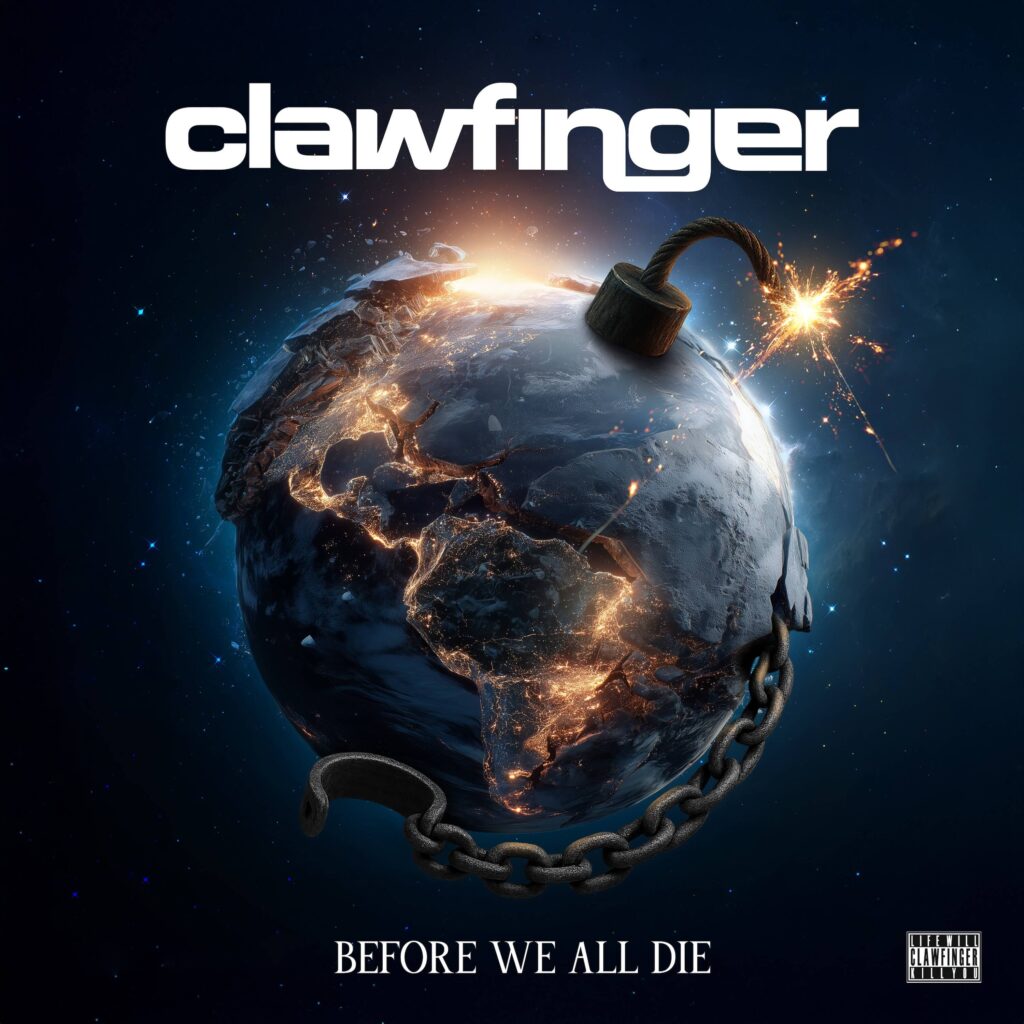
The record will be released via Perception on February 20, 2026, in both Europe and North America. After approximately 1,500 gigs and 1.4 million albums sold across seven previous releases, Clawfinger return not to relive the past, but because the world still has not learned, and someone still needs to say it out loud.
Eighteen years later, the ship is still sinking. But at least Clawfinger are doing it loudly.